IRELAND - THE BURREN, PART 5

This is the 5th part our week-long vacation in Ireland (County Clare and the Burren region), during which we visited the city of Limerick.

Limerick was founded by the Vikings around 922. It was under Norman rule and also played a significant role in the Irish War of Independence. Today, it has become Ireland's third-largest city and a center of art, music, and culture.
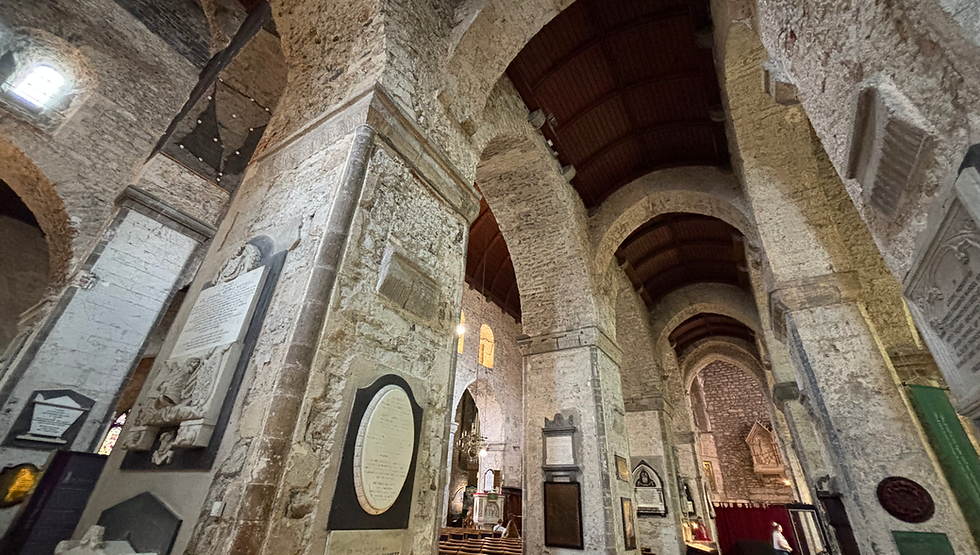
One of the significant and oldest surviving buildings from over 1000 years of history is St. Mary's Cathedral, on the banks of the River Shannon. It was built on the site of a Viking thingmote (meeting place) and later served as the palace of King Thomond O'Brien.

In the main hall, there are 12th-century arcaded vaults. The wooden ceiling inside is made from oak from the forests of the village of Cratloe. Such wood was also used for the beams of Westminster Hall in London and the Royal Palace in Amsterdam.

The cathedral's hallmark is the 21 wooden misericords. The priests conducted most of the services standing, and sitting was prohibited. The foldable rimmed edge on the edge of the choir stalls allowed the priests to sit and rest out of mercy. These were the misericords.
The wonderful result of the craftsmanship is the countless stained glass windows of the church. Some of their themes commemorate the benefactors of the cathedral, but most of them present the biblical stories of salvation.


In the northern transept, there is a small opening in the wall, known as the "leper's squint." In the Middle Ages, infectious lepers were not allowed to enter the church, but this opening allowed them to receive communion and see and hear the mass.

The cemetery surrounding the cathedral, which is still active today, is a sacred place. The oldest part dates back to the 12th century, and the earliest burial records are from 1726.

King John's Castle is another major tourist attraction in Limerick. The pentagonal fortress with three round corner towers, a bastion, and a two-story gatehouse stands on the right side of the Thomond Bridge.

The Vikings appeared at the mouth of the Shannon in the early 19th century. In 861, they established a temporary ship camp on the riverbank; this was likely located where St. Mary's Cathedral now stands. In 922, the Viking leader Thormodu Helgason established a permanent base on King's Island, the area where King John's Castle is now located.
King John was the brother of Richard the Lionheart and the ruler of Ireland. The castle was built between 1200 and 1212, and in addition to its defensive purposes, it also housed John's mint.


Walking back from the castle towards the city center, we spotted a stunning mural dedicated to Dolores O’Riordan, the lead singer of The Cranberries. The artwork was created in collaboration with the Draw Out urban art festival and a Dublin street artist, Aches. The creator captured Dolores's three performances in three layers, but they merged into a single painting.

Among the walls and buildings of the castle district, Limerick's mediaeval history echoes back to us.

We can also consider the mural portraying Sionna as a closure of the neighbourhood. Sionna was the granddaughter of Lir, the primordial personification of the sea. Celtic goddess who sought wisdom at a sacred well, whose waters swept her away, thus creating Ireland's longest river, the Shannon.

On St. John's Square stands St. John's Cathedral. The building was designed by the English architect Thomas Hardwick, and its foundation stone was laid in May 1856. The tower reaches a height of 80m, making it the tallest church tower in Ireland.

The Tait's Clock is named after Tait, the clothing manufacturer. Peter Tait came from Scotland, where he manufactured curtains. He saw potential in mechanised tailoring and established the Tait's Clothing Factory in Limerick.
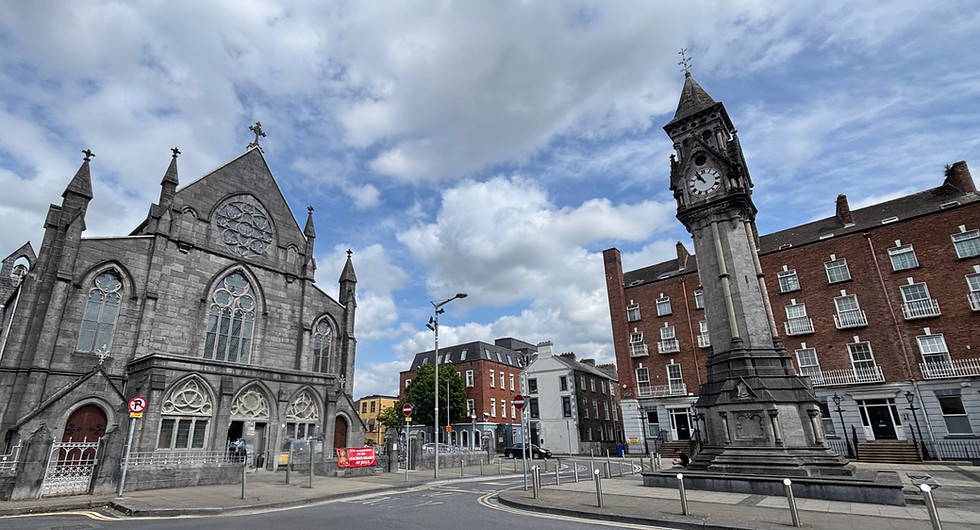
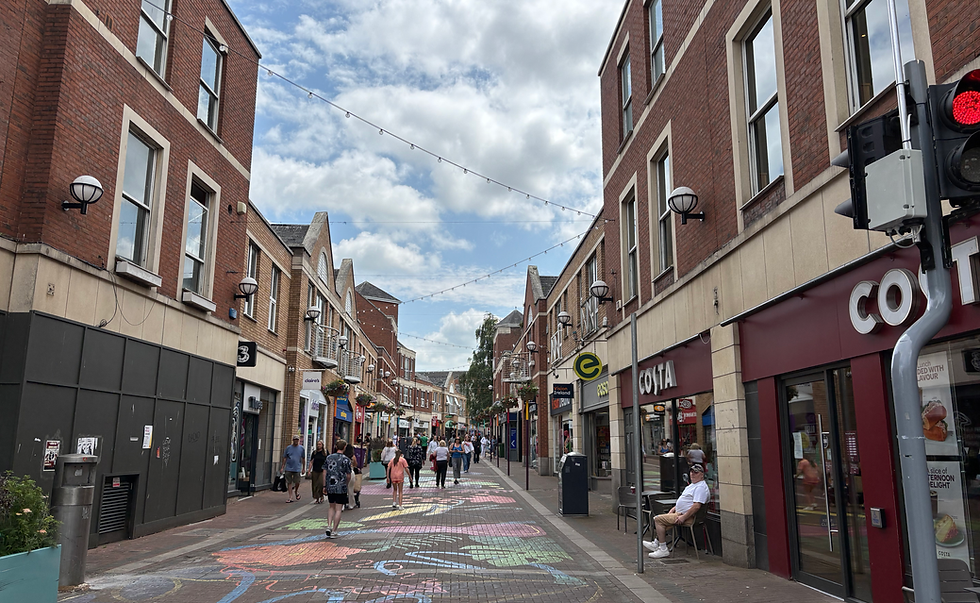
While walking in the city, we can discover interesting street sections, buildings, and squares at every turn.

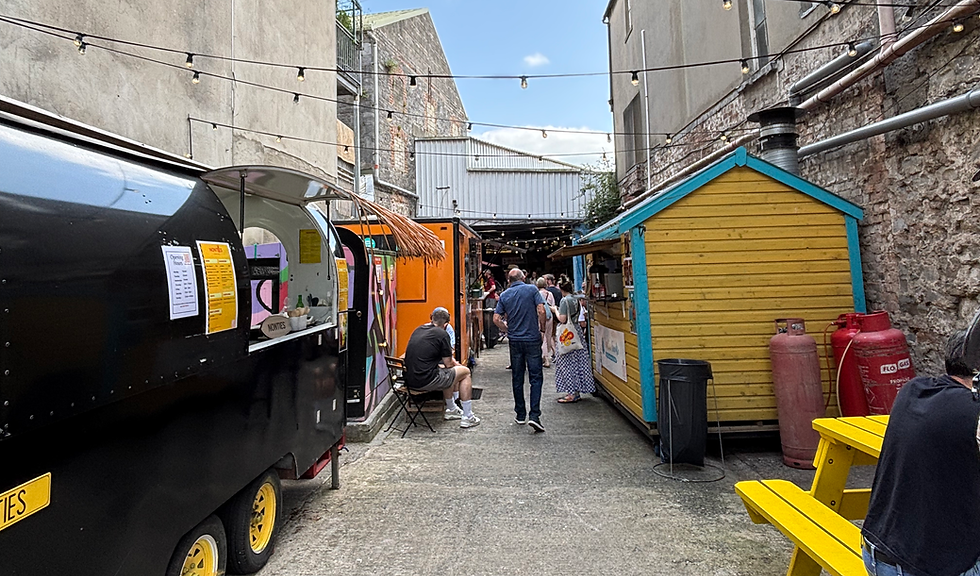
Thus, we stumbled upon a street food and craft courtyard - Food Court - on Wilkham Way, where a vacant lot had been repurposed. It was a little like Camden Market in London, but on a smaller scale. And unfortunately, the food wasn't that good either, even though the Mexican and Indian buffets seemed promising.
But this is how we stumbled upon a local Muay Thai championship as well.

If we get tired of the streets, let's go to the banks of the Shannon River and continue our walk there.


During our week-long trip, we visited two cities - Galway and Limerick. Both surprised us because instead of the grey, monotonous cityscape, we encountered vibrant and lively cities rich in history and culture. If possible, don't miss either of them from our itinerary.
On the last two days of our trip to Ireland, we drove along a section of the Wild Atlantic Way once more and also took a ferry to the Aran Islands.
June, 2025


