BAOPU TAOIST TEMPLE

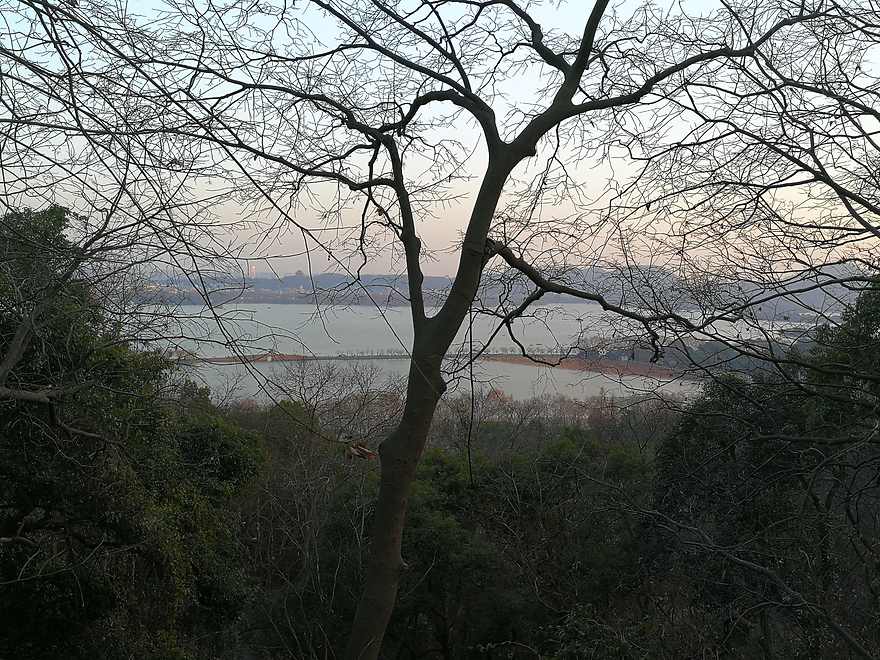
The Baopu Taoist Temple lies hidden away on Geling Mountain, which surrounds West Lake. Few people know about it, and neither the guidebooks on Hangzhou nor organized tours often bring tourists here.
Taoism is associated with the Chinese philosopher Laozi, whom many believe was not even a real person. Even Confucius himself was confused by him and wrote the following:
“I know that birds fly; I know that fish swim; I know that animals can run. Running creatures can be trapped, and swimming creatures can be caught in a woven net. Those that fly can be shot down with an arrow. But the dragon is beyond my understanding; on the wings of the clouds and winds, it rises to the heavens. Today I saw Laozi, and he is like a dragon!”
The temple was originally a summer retreat built by Ge Hong, a Taoist chemist and medical expert who worked on developing an elixir of immortality and was also regarded as a great authority on chemistry. Baopu is Ge Hong’s Taoist name.
The building was constructed during the Jin Dynasty; it was later used as an imperial garden, then demolished, rebuilt, and expanded. Today, it is considered one of the largest Taoist architectural complexes in China.
The centerpiece of the temple is the Gexian Hall, the sacred site. Above it is an observation deck; from here, Ge Hong watched the sunrise, the stars, and the moon. His observations helped his astronomical research. The hall is made of wood and brick.

A detail of the temple
The foundation of Taoism is the pursuit of balance in nature. The secret to success lies in maintaining the constant change of opposites, allowing good to turn into bad and bad to be corrected—just as day and night transform from one into the other, and back again. The yin-yang symbol represents the two opposite sides of the world. Neither can exist without the other; they cannot be separated and can only be understood in relation to one another. Everything has the potential for change.

The symbol of yi-nyang on a door

Incense burner
Not far from the temple, at the top of the mountain, stands the Sunrise Pavilion. The original structure was built during the Yan Dynasty, and it was given its current form in the 1950s. It is said that the most beautiful sunrise in China can be admired here on October 1. A visit to the temple can be combined with a tour of West Lake and the Baochu Pagoda.
July, 2018