CHICAGO - SIGHTSEEING AND UCHICAGO

It’s hard to say what the deciding factor was: our experiences living in China or the state of education here at home? Or perhaps it was all of these things together that led our youngest child to decide to study abroad. Opinions are divided regarding the media coverage of successful university admissions abroad: there are positive commenters who acknowledge the energy invested, and there are those who view the parents’ deep pockets as the only guarantee of success. We saw the effort that went into it. Two years of hard work alongside school, after school, on weekends, and during the summer resulted in our younger son being admitted to the University of Chicago.
ÉIt was fascinating to follow the admissions process and then the university’s communications afterward: gratitude, pride, a positive mindset, support, and a sense of belonging to the community. So we set off for Chicago one day in late September to help him move in and get started at school.
Chicago wasn’t unfamiliar to us. We, as parents, had been here 21 years ago. At that time, I was still pregnant with our oldest child.

In 2024, part of the family, my husband and our children visited Chicago again while checking out the three universities on the “where I’d like to go” shortlist in Canada and the United States. Now, in 2025, I traveled there with the boys. The city didn’t hold many new surprises for my older son, but I was curious to see what changes the past 21 years had brought.

During our trip in 2004, the focus was on exploring the city and seeing the sights, along with a day trip to Las Vegas.

The Grand Canyon was also part of our plans, but we only made it as far as Hoover Dam. It was still a great experience.

Now, in 2025, we’ve tailored our plans to fit the university move-in schedule and our younger child’s free time. Each day unfolded on an ad hoc basis, depending on whether we could meet up or not.
Our accommodations were located in the city center, on the 8th floor of the historic Allerton Hotel, with a partial view of downtown. For 21 years, we’d been staying at our friends’ apartment, and we’d wake up to this view every morning.


In 2004, we visited the zoo, the Planetarium, the Field Museum, the Museum of Science and Industry, and the Aquarium.

In 2025, we voted for the lighter-hearted programs.
The Magnificent Mile:
The history of Michigan Avenue began in the mid-19th century, when the original section was built, stretching along Lake Michigan to the city’s southern border. During the Great Chicago Fire of 1871, the mostly wooden buildings burned down and were used to fill in the lakefront. As early as 1891, the first plans to extend Michigan Avenue northward appeared, and development continued continuously until the stock market crash. The recovery began in 1947, when real estate developer Arthur Rubloff launched a campaign to revitalize the district. His plans included renovating existing buildings, constructing new ones, and restoring the area’s former reputation. He even gave the avenue a name: The Magnificent Mile. In 1970, the 100-story John Hancock Center was built here, followed by the 74-story Water Tower Palace. Today, the one-mile-long Magnificent Mile has grown into one of the world’s most famous shopping avenues.

The avenue is lined with numerous stores from global brands. Among them is the Starbucks Reserve Roastery, an imposing five-story complex. We’re not a family of coffee drinkers, but anyone who steps inside will find it hard to refuse a good cup of coffee. The aroma of coffee and pastries fills the interior, which places great emphasis on design. In front of the building, there’s usually a long line of fans waiting to be admitted to this new temple of coffee.


Twenty-one years ago, we signed up for a themed cruise on the Chicago River that presented the famous buildings along the riverfront and, through them, the city’s history. Honestly, I don’t remember a thing about it, but judging by the photos, we really were there. :-)

During their trip last year, the boys considered the boat ride one of the most interesting activities even despite the rain, so we didn’t want to miss it this time either.
In the late 1770s, Jean Baptiste Point DuSable, a French-African descent, and his wife were the first known settlers to build a permanent home, started a family, and began trading along the banks of the Chicago River; then Native American tribes were granted the right to occupy a 6-mile-wide strip of land at the river’s mouth. Within a few decades, Chicago developed from a small, bustling settlement into a dynamically growing industrial city. Sugar and cotton were shipped from the Southern states to the East Coast, while wheat, corn, and lumber were transported from the Midwest to every corner of the country. The Chicago River became a commercial hub filled with docks and teeming with cargo and passenger ships. Meat-processing plants, as well as glue, soap, and leather goods factories, sprouted up one after another along the riverbank. In 1887, city officials decided to divert the course of the Chicago River because all of the city’s sewage was flowing into Lake Michigan, threatening the city’s drinking water supply. (The water quality of Lake Michigan has been excellent ever since; however, the industrial areas of the metropolitan region are largely responsible for the pollution of the Gulf of Mexico.)
In 1871, everything changed; a fire broke out and destroyed much of the city. The buildings erected after the fire did not differ much from their former selves, but thanks to technological advances, Chicago became the main center of architectural innovation in America.
The approximately 90-minute boat tour showcases the results of this development. Why do I recommend it? You see the buildings from a completely different perspective than you would on a walking tour. The tour guides are knowledgeable and engaging, explaining the city’s past and the history of its famous buildings in a way that’s easy for foreigners to understand. You can combine the river cruise with a trip out onto Lake Michigan.
Here are a few interesting buildings we got to know during the tour:
Tribune tower: In 1922, the Chicago Tribune held a competition to design its new headquarters to mark its 75th anniversary. Two New York architects, John Mead Howells and Raymond Hood, submitted the winning design. The building is in the Neo-Gothic style, with pillars on top characteristic of medieval churches. The figures adorning the Tribune Tower symbolize journalism and representing truth and gossip. The building rises 36 stories, 141 meters above street level on Michigan Avenue. Embedded in its facade are 149 stones from historic sites such as Westminster Abbey, the Taj Mahal, the Acropolis, and the Chinese Great Wall. The 150th was a stone from the Moon, which was displayed in a window until 2011. The tradition began in 1914, when Colonel Robert R. McCormick, a reporter for the Chicago Tribune, was reporting on World War I and brought back to America a piece of a cathedral that had been damaged by the Germans.
The Tribune Tower was one of the world’s most beautiful office buildings; today, it houses apartments.

Wrigley building: When Michigan Avenue was extended north of the river, the area’s revitalization was sparked by chewing gum magnate William Wrigley Jr., who decided to build a new headquarters on an oddly shaped lot. In 1893, Wrigley introduced his new product at the Chicago World’s Fair, where it was a huge success. In keeping with the World’s Fair’s “White City” concept, the exhibition buildings were constructed in a Neo-Classical style and painted snow-white. The overall effect and the success made a deep impression on Wrigley, and he had his twin-tower headquarters built in six shades of white terracotta. The two towers are of different heights, and are connected by a bridge. At the top of the taller tower, a clock approximately 5 meters in diameter has become an integral part of the city’s skyline.


Trump tower: The 92-story, mixed-use skyscraper was built with reflective glass and a stepped design, mirroring the neighboring buildings and adapting to their varying heights. To withstand wind loads, the tower was equipped with a special concrete core and support arms, a technique also used in the construction of the Burj Khalifa. Upon its completion in 2009, it was the second-tallest building in the United States. The giant “Trump” sign was installed on the building in 2014, dividing public and professional opinion.
35 East Wacker/Jeweler tower: Nestled among the tall skyscrapers on the left side of the picture is an attractive, “small” building: the Jeweler Tower. Although it now appears tiny among these giants, when it was completed in 1927, it was the world’s tallest building at 159 meters. The tower resembles an Italian Renaissance palace, with its terracotta cladding. An interesting feature of 35 East Wacker is that the center of the building functioned as a massive parking garage; elevators lifted cars up to the upper floors, where an automated system parked them in designated spaces. Al Capone’s restaurant reportedly operated in the tower during Prohibition, even though Al Capone was officially in prison at the time.

Marina city: Architect Bertrand Goldberg wanted his towers—which looked like sunflowers or cornstalks—to bring the “city within a city” concept to life and prevent people from moving to the suburbs. In 1967, this approach was entirely new and revolutionary: the building housed a theater, a bowling alley, an office building, shops, parking lots, and even a marina.
Architect Bertrand Goldberg designed not only Marina City in Chicago, but also River City. Built in 1986, this 10-story mixed-use building features an “S-shaped, curved facade and characteristic arched windows that are reminders of its designer. It stands on a pier, making it easily accessible by boat.
AMA plaza: Next to Marina City stands the modern, 52-story black building designed by Ludwig Mies van der Rohe, which was completed in 1972 for IBM. Mies van der Rohe’s buildings are free of ornamentation, emphasizing the simple beauty of the steel structure and glass. The panoramic view of Lake Michigan from the tower was blocked by the construction of the Trump Tower in 2009.

Merchandise Mart: The Merchandise Mart is one of Chicago’s Art Deco buildings, constructed in the 1920s. The steel-framed structure is clad in limestone, terracotta, and bronze, and it served as a wholesale warehouse for Marshall Field, offering rentable spaces. The idea was to bring together the sale of furniture, textiles, and decorative materials under one roof. The concept failed. The Great Depression hit the company, and the massive building eventually came into the possession of the Kennedy family for a long time.

St. Regis: Completed in 2020, the St. Regis, located in the Lakseshore East neighborhood, became Chicago’s third-tallest skyscraper with its 101 stories. It was designed by Jeanne Gang of Studio Gang Architects. The St. Regis consists of three towers that rise in height and resemble cell phone signal waves. The sides of the skyscraper give the impression of being wavy, but the building’s structure contains no curved elements. The illusion is created by a cut-off geometric shape and blue glass in various shades. Another interesting detail is that during construction, it became clear that the water-filled basins intended to absorb the impact of wind would not be sufficient. Therefore, the pressure on the building was solved by leaving one section empty and allowing the wind to blow through between the two floors.

Reid Murdoch Center: The Reid Murdoch Company used the red-brick building with terracotta trim as an office and for food production and processing; they even rolled tobacco for cigars there. The center’s location allowed for connections between steamboats and rail lines, ensuring a continuous supply chain. The building was even connected to the city’s downtown freight tunnel system, 18 meters below street level.

Along the northern and eastern sections of the Chicago River, there are fewer skyscrapers and more industrial buildings. The Civic Opera House, the second-largest opera house in North America, is located in this area.
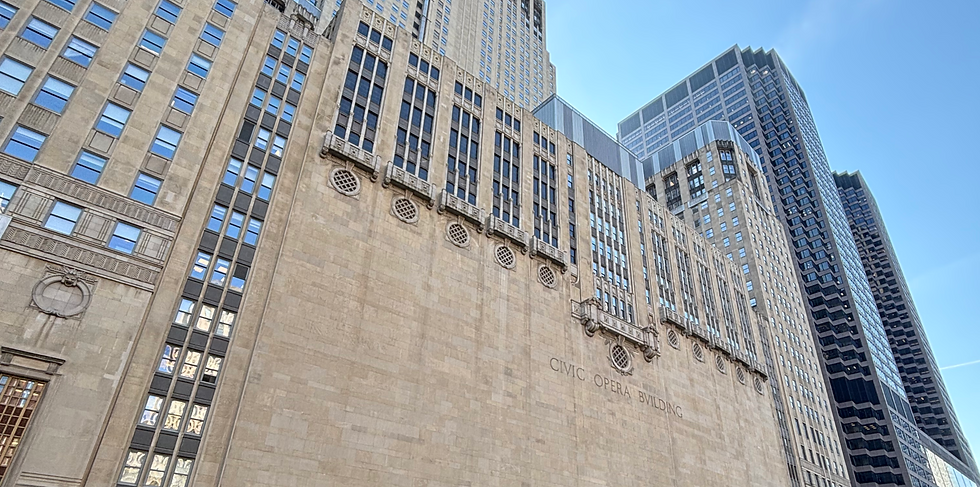

At the end of the 90-minute course, we’ll sail out to the harbor. On the way back along the main channel, we’ll once again see the group of eclectic yet harmonious skyscrapers.

Chicago’s Bridges: The Chicago River has three sections within the city center. The main branch is the east-west section stretching from Lake Michigan to Wolf Point; at Wolf Point, the river splits into the north and south branches. The city’s 18 bridges are located along the main branch and the south branch. The bridges are bascule bridges—even the DuSable Bridge. Named after the city’s first resident, its construction contributed to the development of Michigan Avenue. An interesting feature is that it is a two-level bridge, with the upper level reserved for pedestrians and the lower level for cars. The city’s newest bridge is the Franklin Delano Roosevelt Memorial Bridge.


If you don’t want to take a boat ride, walking is an excellent alternative for exploring the city, especially the Riverside Walk:
The award-winning Chicago Riverwalk aims to highlight the Chicago River and the city’s recreational opportunities. The city has acquired approximately 985 hectares of parkland and developed 5.5 miles of waterfront access. The Riverwalk is 1.25 miles long and offers a variety of experiences for exploring Chicago. You can walk or run along the well-developed riverside promenade, while the snack bars, restaurants, and bars offer a variety of culinary delights and entertainment options.

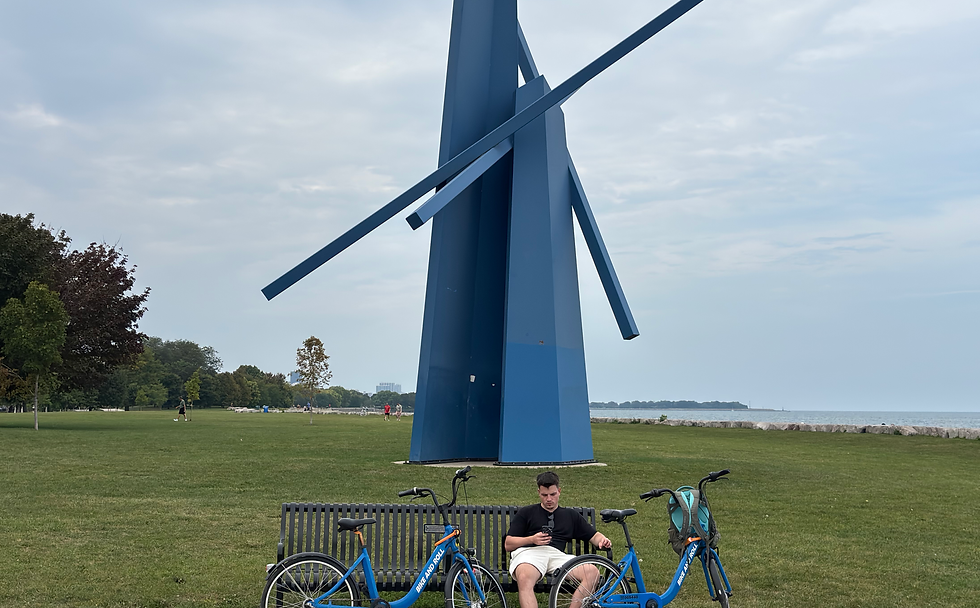
If we don’t even want to walk, let’s hop on a bike! Back in 2004, when I was pregnant, this never even crossed my mind, but it turned out to be one of the best activities on this trip. True, it’s not the cheapest option. Since our accommodation was in the city center, we walked to Navy Pier and rented bikes there. It cost $83 for two people for half a day, and for that price, we got bikes that were in pretty poor condition. You can also rent bikes, including e-bikes by downloading the Lyft app. Those are in better condition, but they aren’t any cheaper. It’s no coincidence that Chicagoans tend to use this service for relatively short periods of time.
We cycled north, with Loyola University as our destination, because our younger son’s girlfriend had started her studies there. Heading north, the Lakefront Trail bike path is about 7–8 km long, and you can turn back at Addmore Avenue. Both beginners and advanced riders can enjoy it: a wide bike lane where everyone can ride at their own pace. Separate lanes have been designated for runners, and in several sections, for pedestrians as well. In addition to the physical activity, there’s plenty to enjoy visually: a varied shoreline, marinas, beaches, rest areas, and restaurants. Your ride doesn’t have to end at the end of the bike path; with a little extra caution, you can continue biking through the city. If you have the time, take a ride—a completely different side of Chicago unfolds as you leave the downtown area and venture further away.

Chicago has a population of approximately 2.7 million. That’s not very many, considering it spans 77 city districts. These neighborhoods are often defined by shared roots, religion, identity, or interests. There are Swedish, Czech, Polish, and Chinese communities, areas popular with artists, and an LGBTQ neighborhood. For more on these 77 communities and how they formed, I recommend reading the following article:
The University of Chicago - Neighborhoods.
Another article categorizes the communities based on which “L” line they’re located on. “L” is short for “elevated” and refers to Chicago’s distinctive form of transportation, which primarily runs above street level: Chicago by ‘L’.
Exploring and getting to know these neighborhoods will be the focus of a future trip. So far, we’ve only managed to visit Chinatown. The neighborhood has a long history. In the 1870s, during the development of the railroad, countless workers arrived in the country and in Chicago. Their numbers rose significantly after World War II, when the relaxation of immigration laws made it easier to settle here.
To be honest, Chinatown was a bit of a disappointing experience for us. Of course, maybe we didn’t explore it thoroughly enough, but I think London’s Chinatown far outshines Chicago’s.

Of course, we couldn’t skip Navy Pier this time either: Chicago’s pier has a long history. During the Great Depression, commercial activity declined, and so did traffic on the pier. It played a military role during both world wars: barracks, a prison, and an entire naval base operated here. It also served as the site of a university campus, the ballroom for the American Biennial, and ChicagoFest. Starting in the 1990s, the pier took on a new function, with entertainment becoming its primary focus.


Another must-see attraction is Millennium Park: According to the story, while Mayor Richard M. Daley was at his dentist’s office on Michigan Avenue, he looked out the window at the parked cars and the train station and said, “Let’s cover it with a park!”, and that’s how Millennium Park came to be. The park features several iconic landmarks: the Pritzker Pavilion, Cloud Gate - nicknamed “the Bean”- and the Crown Fountain. Regardless of age, everyone can find something to enjoy here. That’s exactly what we did in 2004—and again 21 years later.


If you're already at Millennium Park, don't miss the sign marking the start of the famous Route 66, Begin Route 66. We walked right past it several times until a group of young people asked us to take their picture. That's when we looked up and realized the significance of the place

Also located near the park is the Raising Cane's Chicken Fingers fast-food restaurant. I certainly wouldn't have gone in on my own, but the kids unanimously recommended it. And rightly so—we went back several times. They serve the most delicious, tender, flavorful chicken bites, topped with a divine sauce. Another favorite was the Nutella Cafe on Michigan Avenue, where everything revolves around Nutella. You can even order Nutella personalized with your name on it.

Of course, we tried Chicago-style pizza again:
In the early 1900s, Italian immigrants arrived in America in search of work and a better life. Even on the other side of the world, they held fast to their roots, their culture, and their food. Pizza wasn’t very well known in America at the time, until two entrepreneurs, Ike Sewell and Ric Riccardo, opened Pizzeria Uno in 1943 and redefined the concept of pizza. The pizza served here combined the thin, crispy Neapolitan crust with the rustico—a street food popular in Salento, Italy—a pie filled with mozzarella and tomatoes. Deep-dish pizza is prepared in a cast-iron pan lined with sourdough crust. It is then filled with mozzarella cheese and topped with a layer of tomato sauce. The original pizza contained only cheese and tomatoes, but today it can be ordered with a variety of toppings and multiple layers.
Our friends love the selection and flavors of the Giordano's chain, so just as we did in 2004, we ate until we were stuffed at one of their restaurants also in 2025.


Most American foods can’t be called diet-friendly, and the portions aren’t small either. Sometimes we struggled to finish everything. That’s how it went at Weber Grill, too, where we enjoyed some divinely delicious BBQ ribs with our friends, along with a cinnamon-apple-ice-cream. The family has been both an expert and a manufacturer of grilling equipment for over 70 years, which is why a grill hangs above the entrance. Thanks to the open-kitchen concept, we can watch as the food is prepared

Maybe the TimeOut Market at the Corvin Store Budapest opened while we were in Chicago. That gave us the idea to see how they did it in the U.S. The best place to check that out is the Fulton Market district.

During the Civil War, meat processing was one of the most successful industries in Chicago. By 1890, more than 12 million head of cattle and pigs passed through the processing yards each year. The Fulton Street Wholesale Market was built for meat wholesalers, where a market had operated 100 years earlier. The economic crisis and industrial development changed many things: refrigerated trucks were introduced, highways were built, processing began on the farms themselves, or the processing companies moved south. The warehouses slowly emptied and were converted into industrial spaces. Then, in the 1980s, artists and galleries moved into the factory buildings. The district gained new momentum when McDonald’s and Google relocated their offices here. High-rises were built, more and more restaurants opened, and the population doubled. A truly vibrant, youthful neighborhood has emerged. The number and variety of restaurants are impressive: Mexican, Asian, European; vegan and meat-lovers’, diet-friendly, healthy, and “unhealthy” options.
Chicago’s TimeOut Market is housed in an imposing red-brick industrial building. Here are a few of the restaurants on offer:

After much consideration, we chose Mexican food. By the time we finished our early lunch, the empty benches and tables had filled up.


On our way home, we almost grabbed a doughnut, but it would have been hard to decide anyway :-)

On our first visit to the U.S., we naturally focused on the famous sights; now the emphasis has shifted to pleasures such as music. Instead of fancy stores, we looked for places that sell vinyl records, and, at my husband’s request, we also visited the birthplace of house music. The style was named “house music” after the Warehouse club, where the legendary DJ Frankie Knuckles played in the 1970s.

During our walk, we also discovered the imposing building of Union Station. Union Station was built by a consortium of four railroad companies under the direction of architect Daniel Burnham. The building was designed in the Beaux-Arts style and clad in limestone. The main building formerly housed a prison for transported prisoners, a women’s lounge, a nursery, and a first-aid station. Since its opening, the station has handled significant traffic, with approximately 3 million passengers departing from or arriving here each year.


Just like 21 years ago, we couldn’t pass up the chance to go to the top of a skyscraper and admire the panoramic view. The Willis Tower (formerly the Sears Tower), standing 521 meters tall (including antennas), offers one such opportunity. Construction was completed in 1973, and at the time it was considered the tallest building in the world. The skyscraper’s structure consists of nine units, each ending at a different height. Its stepped shape, black glass, and the antennas at the top make it a unique feature of the city’s skyline. The Skydeck is a glass observation deck on the 103rd floor, from which you can look down on the city as if you were standing in the air.

Another option is the John Hancock Center, which stands 457 meters tall, including its antenna. The building’s “X”-shaped bracing makes it unique. Here, you can enhance the classic view with a 360° experience (360 Chicago), where the building’s glass wall is tilted to provide visitors with a wider panorama.
I don’t know which is the better choice. If you have the chance, go up to the top of one of them both during the day and at night. We went during the day in 2004 and at night in 2025. The evening lights are magical, but for me, at the top of Big John. However, it was distracting that the glass was reflective and we could see ourselves in it.


In 2004, we visited every attraction in the Museum Quarter, but this time we skipped it. However, we couldn’t resist taking a walk to the Adler Planetarium to admire the city from there as well. The planetarium was founded by businessman Max Adler in 1930 and was the first planetarium in the United States. It’s located at the tip of Northerly Island. The island is actually a peninsula that once hosted a world’s fair and later served as the site of Mags Field Airport.


During that week, we also managed to visit the Chicago Botanic Garden. It’s quite a distance from downtown, but we drove with our friends to the area around Northwestern University, and that’s when the idea came up: we hadn’t seen the botanic garden yet, but they really love it in every season, so let’s check it out together!
The garden was the idea of the Chicago Horticultural Society, and with its opening in 1972, the society was able to realize its mission, the “city in a garden” concept, at a permanent location. The grounds consist of a series of sections carefully designed by experts. There are Japanese, English, vegetable, and fruit gardens, as well as an educational center. Although we weren’t there during the most ideal time of year, the flowers had already faded, and the leaves hadn’t yet taken on their fall colors, we were still greeted by a truly breathtaking landscape.

We spent the rest of our time commuting between the University of Chicago and the city, and shopping. The university is located on a 217-hectare campus bordered by the neighborhoods of Hyde Park, Kenwood, Woodlawn, Bronzeville, and South Shore. It’s a city within a city, where you can find everything. There are plenty of green spaces, and the architecture is a mix of modern, classic, and straight out of a Harry Potter movie. The university is ranked among the top 11 in the world and in the top 5 for economics. It has produced 97 Nobel Prize winners, 53 Rhodes Scholars, and 28 Marshall Scholars.

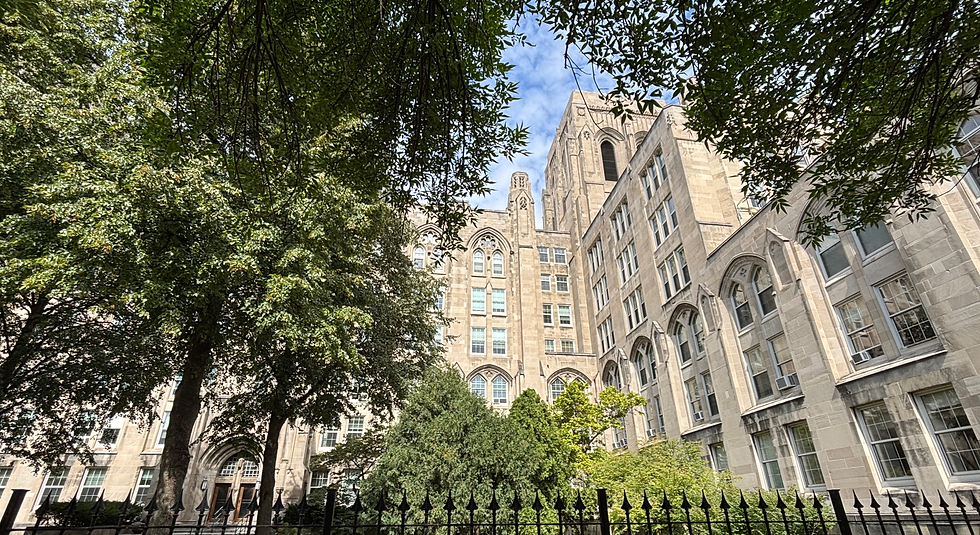
The neighborhood has a charming atmosphere, with interesting houses and buildings. The Barack Obama Presidential Center is being built nearby, but this is also where one of Frank Lloyd Wright’s buildings, the Robie House, is located.

Frank Lloyd Wright was a leading architect of the 20th century. His style is known as organic architecture, which emphasizes harmony between the building and its surroundings. One look at the Robie House and everything becomes clear. Design work on the building began in 1908, and it was completed in 1910. Even now, in 2025, it remains modern, stylish, and timeless. Frederick Robie was an extremely successful businessman who wanted to build his dream home in his hometown of Chicago. Robie’s expectations regarding the layout of the house and his innovative approach aligned with Wright’s philosophy: Robie found his architect, and Wright found his ideal client. The house is managed by the F. L. Wright Foundation. It is open to visitors on specific days, and a maximum of 20 people are admitted at a time. By explaining that we were flying back the next day, we managed to secure a spot, even though we exceeded the limit on the approximately 1.5-hour tour, which was led by an architect volunteer. It was an interesting contrast for me to see, that the design and concept of the interior spaces had long since lost their modernity; only through significant renovation could the building’s interior be transformed into a functional, livable home.

On our last day in Chicago, we had the orientation, the final move-in, and our farewells ahead of us. The UChicago Class of 2029 headed off to orientation, while we headed back to Hungary.
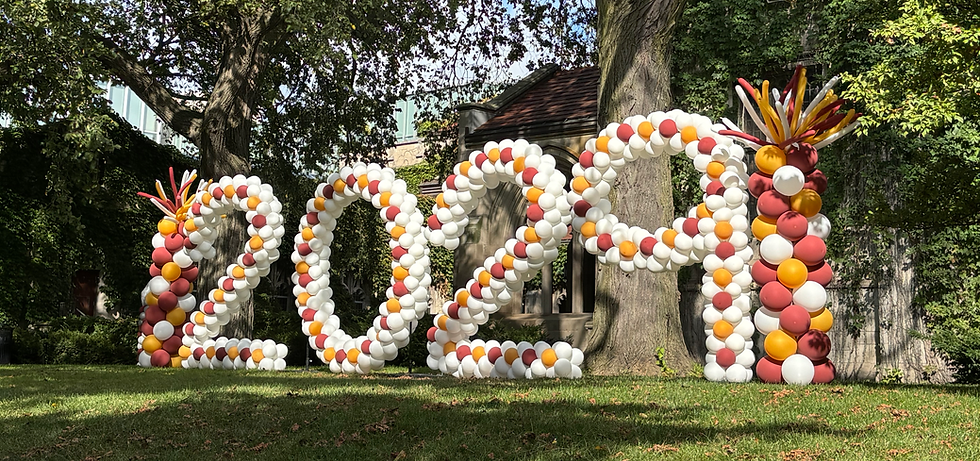

We had a busy, emotional week; we said goodbye knowing that we’ll be back soon!
September, 2025


